
By Gerardo Graham June 9, 2026
ACH authorization requirements are the rules and practical steps a business follows before initiating an ACH payment from a bank account. At the center of every valid ACH debit is consent. A customer, tenant, donor, member, client, or another business must authorize the payment before funds are pulled from their account through the ACH network.
That may sound simple, but ACH authorization is not just a checkbox on a payment page. It affects how you collect bank account payments, how you prove consent, how you handle recurring payments, how you respond to disputes, and how you reduce preventable ACH returns.
It also varies based on whether the payment is one-time or recurring, consumer or business, online or phone-based, fixed or variable, and processed through a payment gateway, payment processor, merchant account, or direct banking relationship.
The ACH network is a batch-based electronic payments system used for direct deposit, direct debit, bill payments, bank transfers, subscriptions, donations, rent, invoices, and many other bank account payments. The Federal Reserve describes ACH as a nationwide network through which depository institutions send electronic credit and debit transfers in batches.
For business owners and finance teams, the key takeaway is this: ACH processing moves the payment, but ACH authorization gives you permission to start it.
Processing, settlement, returns, reversals, refunds, and account verification are all separate parts of the payment lifecycle. Authorization comes first because it establishes the payer’s consent and gives your business a record to rely on if a transaction is questioned later.
This guide explains ACH authorization requirements in a practical way for merchants, subscription businesses, ecommerce sellers, service providers, nonprofits, landlords, membership organizations, startups, finance teams, and decision-makers. It is for general educational purposes.
ACH authorization requirements, recordkeeping rules, return timelines, fees, and processing outcomes can vary by provider, financial institution, transaction type, authorization method, and business model.
What Is ACH Authorization?
ACH authorization is the permission a payer gives a business or organization to initiate an ACH transaction involving the payer’s bank account. For an ACH debit, the payer authorizes the business to pull funds from a checking or savings account.
For an ACH credit, the payer or sender authorizes money to be pushed to another account, such as payroll direct deposit or vendor payment.
In day-to-day business use, ACH authorization most often refers to ACH debit authorization. That includes payments such as monthly subscription billing, rent collection, membership dues, charitable donations, utility payments, invoice payments, installment plans, insurance premiums, and service retainers.
The person or business whose account is being debited is commonly referred to as the receiver, while the business initiating the ACH entry is the originator.
An ACH authorization may be collected in several ways. A customer might sign an ACH authorization form, agree through an online checkout page, authorize payment through a secure customer portal, approve a phone authorization, or sign a business agreement that includes ACH debit consent.
The method matters because ACH payment authorization rules depend on how consent was captured and what type of account is being debited.
ACH authorization is not the same as ACH processing. Authorization is the consent. ACH processing is the operational movement of the transaction through the ACH network.
Authorization is also different from settlement, which is when funds are posted between financial institutions. It is different from an ACH return, which happens when an entry is sent back due to insufficient funds, invalid account information, account closure, unauthorized claims, or other reasons.
ACH authorization is also not the same as card authorization. A card authorization usually checks whether a card transaction can be approved through the card network. ACH authorization does not provide the same real-time approval experience.
A customer can authorize an ACH debit, but the transaction can still fail later because of insufficient funds, incorrect routing number, closed account, account restrictions, or a dispute.
For a broader explanation of how bank account payments move, see this helpful overview of what ACH payments are and how ACH transactions work.
Why ACH Authorization Requirements Matter
ACH authorization requirements matter because they help confirm that a transaction was initiated with permission. If a payer later says, “I did not authorize this payment,” your business may need to produce proof of authorization. Without a reliable record, you may have difficulty defending the transaction, responding to a bank inquiry, or resolving the customer dispute.
For businesses that rely on recurring payments, ACH authorization is especially important. Subscription billing, membership dues, rent, donations, installment payments, professional service retainers, utilities, tuition plans, and B2B invoice collections all depend on predictable payment timing.
If the authorization language is unclear, incomplete, or difficult to retrieve, the business can face more failed payments, more unauthorized return claims, more customer frustration, and more administrative work.
Nacha states that the Nacha Operating Rules are the foundation for ACH payments and define the roles and responsibilities of ACH network participants. Businesses do not usually interact with the ACH network alone.
They may work through an ODFI, payment processor, payment gateway, merchant services provider, software platform, or third-party sender. Even so, the business that originates the transaction is generally responsible for obtaining proper authorization from the receiver.
Good authorization practices also help separate legitimate customer issues from preventable operational mistakes. For example, an ACH debit may be returned because a customer revoked authorization, because the account number was typed incorrectly, because a recurring payment amount changed without proper notice, or because staff used the wrong transaction type. These are not the same problems, and they need different fixes.
ACH authorization requirements also support customer trust. Customers are more comfortable sharing routing number and account number details when they understand who is debiting the account, what amount will be charged, when the debit will occur, and how to stop future payments. Clear ACH payment consent reduces confusion before it turns into a dispute.
Businesses should also care about return rates and processor expectations. Payment processors and financial institutions often monitor ACH returns, unauthorized returns, unusual transaction patterns, and documentation quality.
Weak authorization workflows can lead to funding delays, reserves, account reviews, higher scrutiny, or termination of ACH processing privileges.
Key Parties Involved in ACH Authorization

ACH authorization requirements are easier to understand when you know the parties involved. ACH payments move through a network of participants, and each participant has a role in the transaction. The business does not need to memorize every technical detail, but it should understand where responsibility begins and ends.
The originator is the business, nonprofit, landlord, platform, service provider, or organization that initiates the ACH transaction. If your company collects monthly membership dues by ACH debit, your company is the originator. If your finance team sends payroll direct deposit, your company is also acting as an originator for ACH credits.
The receiver is the person or business whose bank account is being credited or debited. In consumer ACH payments, the receiver may be a customer, donor, tenant, patient, student, or member. In business ACH payments, the receiver may be a vendor, contractor, franchisee, client, borrower, or commercial customer.
The ODFI, or Originating Depository Financial Institution, is the financial institution that receives ACH entries from the originator or its processor and submits them into the ACH network. The RDFI, or Receiving Depository Financial Institution, is the financial institution that receives the ACH entry and posts it to the receiver’s account.
Many businesses also work with a payment processor, payment gateway, merchant account provider, billing software platform, accounting system, property management platform, donation platform, or subscription billing tool.
These providers may help collect authorizations, store records, tokenize bank account details, submit ACH files, manage returns, and provide reporting. However, using a provider does not eliminate the business’s responsibility to understand authorization requirements.
Originator and receiver responsibilities
The originator should obtain authorization before initiating an ACH debit. It should also use the correct transaction type, store proof of authorization, communicate payment terms clearly, protect sensitive bank data, and respond promptly if a receiver cancels, disputes, or updates account information.
The receiver should provide accurate bank account information, review the authorization terms, keep enough funds available for scheduled debits, and follow the stated cancellation process if they want to revoke authorization. In consumer payments, the receiver may also have rights under laws and banking rules that allow them to dispute unauthorized electronic fund transfers.
The relationship should not be adversarial. Strong ACH payment compliance depends on shared clarity. The payer should know what will happen, and the business should have documentation showing that the payer agreed.
ODFI, RDFI, and provider roles
The ODFI and RDFI help move the transaction through the ACH network. The ODFI generally relies on the originator to submit properly authorized entries. The RDFI posts the entry to the receiver’s account or returns it if there is a problem, such as insufficient funds, closed account, invalid account number, stop payment, or unauthorized claim.
Your payment processor or gateway may set additional ACH debit rules beyond baseline network requirements.
For example, a provider may require specific authorization language, account verification, identity checks, transaction limits, return monitoring, cancellation workflows, or documentation retention procedures. These provider rules matter because your ACH processing relationship depends on them.
ACH Authorization Requirements for One-Time Payments

A one-time ACH debit authorization gives a business permission to debit a bank account once for a specific transaction or obligation. This may be used for ecommerce checkout, invoice payment, a one-time donation, application fee, repair invoice, tax payment, event registration, deposit, or single rent payment.
The main requirement is that the payer must clearly authorize the debit before the ACH transaction is initiated. The authorization should identify the payer, the business being paid, the bank account to be debited, the payment amount or method for determining it, and the timing of the debit.
It should also include a clear statement that the payer authorizes the business to initiate an ACH debit from the specified account.
One-time ACH payment authorization should not be vague. A statement such as “I agree to pay” may not be enough if it does not identify ACH debit consent. The authorization should make clear that the payment will be made by ACH or electronic debit from a bank account.
One-time ACH debits
One-time ACH debits are common for ecommerce sellers, professional services firms, medical offices, repair companies, schools, event organizers, landlords, nonprofits, and B2B invoice payments. The business should capture enough information to connect the authorization to the specific transaction.
A strong one-time ACH authorization typically includes:
- Payer name and contact information
- Business or organization name
- Routing number and account number, or tokenized bank account reference
- Account type, such as checking or savings
- Payment amount
- Date or approximate timing of the debit
- Description of the payment purpose
- ACH authorization statement
- Date of authorization
- Signature, electronic acceptance, or other evidence of consent
- Customer service contact for questions
For online one-time payments, the authorization may appear during checkout or invoice payment. The customer may check a box, click a button, or complete a secure payment flow. The business should keep a record showing what the customer saw and agreed to, not just a transaction record showing that payment was submitted.
For phone-based one-time payments, the business should use an approved phone authorization script and retain evidence required by its provider. That may include a recording or written confirmation, depending on the transaction type and provider requirements.
ACH Authorization Requirements for Recurring Payments
Recurring ACH authorization allows a business to debit a payer’s bank account on an ongoing schedule. This is common for subscription billing, memberships, rent, donations, utilities, insurance, software fees, installment plans, tuition, retainers, and recurring service agreements.
Recurring payments require more detail than one-time payments because the payer is agreeing to more than a single debit. The authorization should explain the payment frequency, amount or calculation method, start date, billing schedule, cancellation process, and any notice rules for changes.
The Consumer Financial Protection Bureau’s Regulation E states that preauthorized electronic fund transfers from a consumer’s account may be authorized only by a writing signed or similarly authenticated by the consumer, and the person obtaining the authorization must provide a copy to the consumer.
It also states that a consumer may stop payment by notifying the financial institution orally or in writing at least three business days before the scheduled transfer.
For businesses, this means recurring consumer ACH debit authorization should be especially clear and easy to document. Even when your payment processor provides the form or hosted payment page, your team should understand what the customer is agreeing to and how records are stored.
Recurring ACH debits
Recurring ACH debits may be fixed or variable. A fixed recurring debit charges the same amount at the same interval, such as monthly rent, a membership fee, or a subscription plan. A variable recurring debit may change based on usage, invoice balance, utility consumption, service hours, donations, add-ons, or order activity.
For fixed recurring payments, the authorization should state the amount and frequency. For example, it might authorize a monthly debit on or around a specific date.
For variable payments, the authorization should explain how the amount is determined and how the payer will be notified if required by applicable rules, provider requirements, or the business’s own policy.
Recurring ACH authorization should also explain how cancellation works. The customer should know where to send a cancellation request, how much notice is needed before the next scheduled debit, and whether cancellation of payment authorization also cancels the underlying service agreement.
Those are related but separate issues. A customer may revoke ACH debit consent while still owing a balance under a contract.
Payment schedule and customer expectations
A recurring ACH payment schedule should be realistic and transparent. If your billing system debits accounts “on or around” the first business day of each month, say that. If weekend or holiday timing can shift the debit date, communicate that in the authorization or customer billing materials.
Subscription businesses should pay close attention to trial periods, renewals, upgrades, downgrades, annual plans, and plan changes. A customer who authorizes one monthly amount may not understand a later annual renewal or usage-based charge unless the authorization and customer notices explain how those changes work.
Landlords, membership organizations, and nonprofits should also avoid informal recurring debit arrangements. A short email saying “you can charge me every month” may not contain enough detail to manage disputes well. A structured ACH authorization form or secure online authorization flow is safer.
Written, Online, and Phone-Based ACH Authorizations
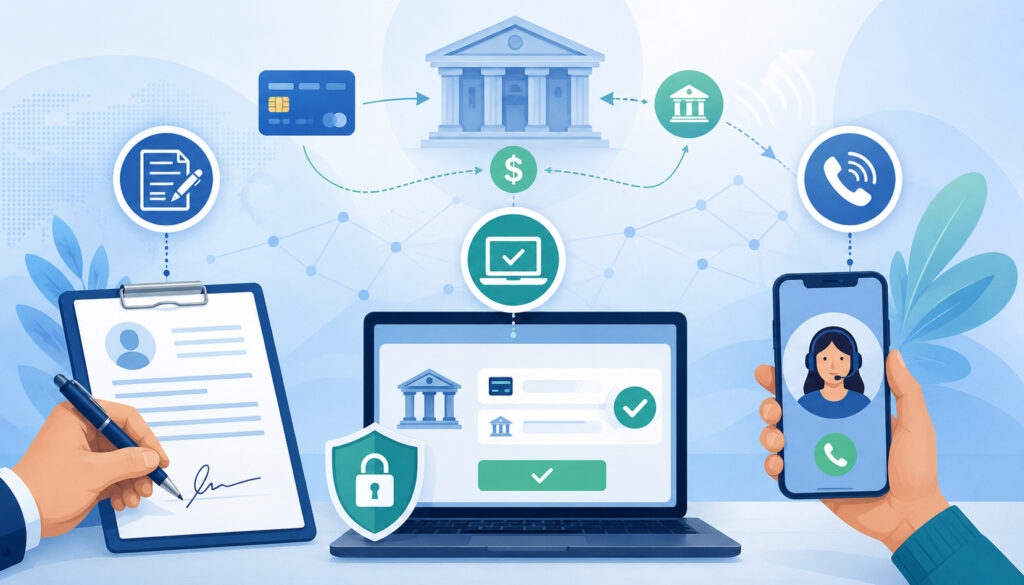
ACH authorization can be collected through written, online, or phone-based methods. Each method can be valid when designed correctly, but each has different documentation needs. The right method depends on your business model, customer relationship, transaction type, provider rules, and risk tolerance.
Written authorization may be collected through a paper form, signed agreement, service contract, lease, donation pledge, membership agreement, or PDF with electronic signature.
Online authorization may be collected through a secure checkout page, invoice portal, customer dashboard, mobile app, or hosted payment form. Phone authorization may be used when a customer provides consent during a call, subject to the rules and restrictions that apply to telephone-initiated entries.
Nacha’s WEB proof of authorization industry guidance notes that authorization occurs when the originator and consumer enter into an agreement allowing the originator to initiate a debit entry to the consumer’s account. It also explains that proof of authorization depends heavily on the authorization process and supporting authentication methods.
Written authorization
Written authorization is often used for PPD transactions, leases, service agreements, installment plans, recurring donations, tuition agreements, healthcare payment plans, and business contracts. It may be signed physically or electronically if the electronic signature process captures intent, identity, date, and the agreed terms.
A written ACH authorization form should be easy to understand and should not hide payment consent inside unrelated contract language. The payer should be able to identify the payment amount, payment timing, account being debited, organization receiving payment, and cancellation instructions.
For recurring payments, the written authorization should be retained as long as required by rules, provider expectations, and internal recordkeeping policies. It should also be easy to retrieve by customer name, transaction date, account token, invoice number, or authorization ID.
Online authorization
Online authorization is common for ecommerce sellers, SaaS companies, subscription businesses, digital memberships, online donations, invoice portals, and customer self-service payments. Online authorization should show the payer the ACH debit terms before the payer submits the payment.
A strong online authorization process captures more than a click. It should retain the authorization language displayed, date and time, customer identity, IP address or device information when available, payment amount or terms, account verification status, and confirmation that the payer affirmatively agreed.
For WEB debits, account validation and fraud detection are especially important. Nacha has stated that originators of WEB debit entries are required to use a commercially reasonable fraudulent transaction detection system, and that account validation is part of that system for the first use of an account number or changes to the account number.
Phone authorization
Phone authorization may be useful for service providers, healthcare offices, utilities, call centers, nonprofits, and businesses that take payments during customer support calls. However, phone authorization should be handled carefully because the payer is not signing a paper form during the call.
Phone-based ACH authorization often requires a script that discloses the business name, payment amount, account information, debit timing, authorization statement, and cancellation or dispute instructions. The business may need to record the call or send written confirmation, depending on the transaction type and provider requirements.
Staff should not improvise phone authorization language. They should follow an approved script and confirm the payer’s identity before collecting routing number and account number details. Call recordings and written confirmations should be stored securely and linked to the transaction.
Consumer ACH vs Business ACH Authorization Rules
ACH authorization requirements differ depending on whether the receiver account is a consumer account or a business account. This distinction affects transaction classification, authorization format, dispute rights, return timing, and recordkeeping expectations.
Consumer ACH payments include payments from personal bank accounts. Examples include a tenant paying rent from a personal checking account, a donor giving monthly from a personal account, a member paying dues, a patient paying a medical balance, or a customer paying an ecommerce invoice.
Business ACH payments involve commercial bank accounts. Examples include B2B ACH payments for invoices, vendor payments, franchise fees, merchant cash flow arrangements, wholesale orders, professional service retainers, and corporate account debits. Business ACH payments may use different Standard Entry Class codes and may not follow the same consumer dispute framework.
Consumer debit authorization
Consumer debit authorization should be especially clear because consumer electronic fund transfers may be subject to Regulation E protections. Regulation E covers electronic fund transfers involving consumer accounts and defines unauthorized electronic fund transfers in the consumer context.
For recurring consumer ACH debits, the authorization should be signed or similarly authenticated, and a copy should be provided to the consumer. A digital copy, confirmation email, downloadable authorization, or customer portal record may support this requirement if it accurately reflects the authorization terms.
Consumer debit authorization should avoid confusing language. Customers should know whether the payment is one-time or recurring, whether the amount is fixed or variable, when the debit will occur, and how to revoke ACH debit consent. If your business changes the payment amount, date, or frequency, follow applicable notice requirements and provider instructions.
Business debit authorization
Business ACH authorization is common in B2B payments and may be documented in a master services agreement, vendor contract, credit application, invoice payment agreement, financing agreement, franchise agreement, or standalone ACH authorization form.
Business debit authorization should still be specific. It should identify the company authorizing the debit, the business bank account, the authorized signer, the payment terms, and the circumstances under which debits may occur.
For variable B2B payments, the agreement should explain whether debits are tied to invoices, statements, orders, settlement balances, or other payment obligations.
Do not assume a business account means “no authorization risk.” A business customer can still claim a debit was not authorized, processed for the wrong amount, sent after cancellation, or initiated against the wrong account. Clear documentation protects both sides.
SEC codes and authorization method
Standard Entry Class codes, often called SEC codes, help identify the type of ACH entry and authorization method. Common examples include WEB for internet-initiated consumer debits, TEL for telephone-initiated consumer debits, PPD for prearranged consumer payments and deposits, and CCD for corporate credit or debit entries.
Using the wrong code can create compliance and dispute problems. For example, a consumer debit authorized online should not be treated like a business CCD transaction simply because it is operationally easier. Your payment gateway, processor, or financial institution should help classify transactions properly, but your business should understand the basics.
What an ACH Authorization Form Should Include
An ACH authorization form is the document, digital agreement, or authorization record that captures the payer’s consent. It may be a standalone form, part of a contract, a secure hosted payment page, or an electronic payment authorization screen.
Whatever the format, the goal is the same: show that the payer gave permission for a specific ACH transaction or series of transactions.
A good ACH authorization form should be specific enough to prove consent and practical enough for customers to complete without confusion. Overly legalistic forms can cause abandonment or support questions. Overly vague forms can create disputes. The best authorization forms are clear, complete, and easy to store.
Authorization language
The authorization language should clearly state that the payer authorizes the named business or organization to initiate an ACH debit from the payer’s bank account. It should identify whether the authorization is for a one-time payment, recurring payment, installment payment, or variable payment arrangement.
Avoid language that only says “I agree to the terms” without identifying ACH debit consent. The authorization should connect the customer’s approval to the bank account payment. It should also state that the debit will be made electronically through the ACH network or as an electronic debit from the designated bank account.
The authorization language should match the actual transaction. If the customer authorizes a monthly subscription, do not use that same authorization for unrelated one-time purchases unless the original authorization clearly permits it. If a business authorizes invoice debits, do not debit for unrelated fees unless the agreement covers those fees.
Payment amount
The payment amount should be stated clearly. For a one-time ACH debit, list the exact amount whenever possible. For recurring fixed payments, state the amount and frequency. For variable payments, explain how the amount is calculated, what limits apply, and how the payer will be notified.
Variable payment language is important for service providers, utilities, usage-based software, professional services, wholesalers, property managers, and businesses that charge based on invoices or balances. The payer should not be surprised by the amount.
If your billing model includes taxes, late fees, convenience fees, add-ons, usage charges, or changing plan levels, explain how those charges are handled. Do not bury payment amount terms in a separate document that customers rarely see.
Payment timing
The authorization should state when the payment will be initiated. For one-time payments, that may be “today,” “on the invoice due date,” or “within a specified number of business days.” For recurring payments, it may be weekly, biweekly, monthly, quarterly, annually, or on a specific due date.
Payment timing should account for weekends, holidays, billing cutoffs, and processing windows. If a debit scheduled for a weekend may be initiated on the next business day, say so. If the payment date can vary based on invoice approval, renewal date, or service usage, explain that.
Clear timing reduces disputes because customers can match the debit to the service or invoice. It also helps finance teams reconcile batches, returns, refunds, and customer communications.
Customer consent and identity
The form should capture the payer’s name, contact information, and consent. For business payments, it should capture the legal business name and the authorized signer’s name and title. For online authorization, the system should preserve electronic evidence of consent, such as timestamp, user account, IP address, confirmation screen, and accepted terms.
For bank account details, collect routing number, account number, account type, and account holder name. Consider account verification to reduce invalid account returns and fraud exposure. Avoid collecting more sensitive data than needed, and do not store raw bank data in unsecured spreadsheets, email inboxes, shared folders, or paper files.
Recordkeeping, Proof of Authorization, and Retention Best Practices
ACH authorization recordkeeping is one of the most important parts of ACH payment compliance. It is not enough to obtain consent; your business must be able to prove it later. Proof of authorization may be requested after a customer dispute, bank inquiry, processor review, audit, return investigation, or internal compliance review.
For written authorizations, keep the signed form or an accurate electronic copy. For online authorizations, keep a reproducible record showing the consent language, customer action, date and time, payment terms, and identity evidence. For phone authorizations, keep the call recording or confirmation record required by your provider and transaction type.
Industry guidance commonly states that ACH authorization records should be retained for at least two years after termination or revocation of the authorization.
For example, ACH originator guidance from financial institutions describes retaining written authorization or reproducible evidence of authorization for two years from termination or revocation. Your provider, bank, counsel, or internal policy may require longer retention depending on your business model and legal needs.
Proof of authorization
Proof of authorization should answer several questions:
- Who authorized the payment?
- What account was authorized?
- What business was authorized to debit the account?
- What amount or payment terms were approved?
- Was the payment one-time, recurring, installment-based, or variable?
- When was consent provided?
- How was consent provided?
- How could the payer cancel or revoke authorization?
- Was a copy or confirmation provided to the payer when required?
For subscription businesses, proof should connect the authorization to the subscription plan, renewal schedule, and customer account. For landlords, it should connect to the lease, tenant, property, and rent schedule.
For nonprofits, it should connect to the donor, giving frequency, and donation amount. For B2B payments, it should connect to the authorized signer, commercial account, invoice terms, and agreement.
Record retention
Record retention should be built into your payment workflow, not handled manually after a dispute occurs. Store authorization records in a secure system that can be searched quickly. Finance, support, and compliance staff should know where to find authorizations and how to escalate a proof request.
Retention policies should address active authorizations, revoked authorizations, expired contracts, closed accounts, canceled subscriptions, refunded payments, and terminated customer relationships.
If your records are scattered across emails, PDFs, payment gateways, CRM notes, and accounting systems, it may take too long to respond when documentation is needed.
Data security
ACH authorization recordkeeping involves sensitive bank account data. Routing numbers, account numbers, customer names, addresses, and authorization forms should be protected with appropriate data security controls. Use encryption, access controls, secure portals, tokenization, audit logs, and least-privilege permissions.
Do not ask customers to email completed ACH authorization forms containing full bank account numbers unless your security and compliance advisors have approved that process. Email attachments are easy to forward, misplace, or expose.
Payment security practices should also include employee training, multi-factor authentication, vendor review, fraud monitoring, and incident response planning. For broader payment data protection context, see this guide on PCI DSS compliance, while remembering that ACH bank data and card data have different rule frameworks.
Revocation, Cancellations, Refunds, and Customer Disputes
ACH authorization requirements do not end after consent is captured. Businesses also need clear procedures for revocation, cancellations, refunds, disputes, and customer communication. Many ACH problems happen because a customer believes they canceled, but the billing system continues to debit the account.
Revocation means the payer withdraws permission for future ACH debits. Cancellation may mean canceling the payment authorization, canceling the underlying service, or both. Refunds involve returning money after a payment has already settled.
Reversals are specific ACH corrections used in limited circumstances and should not be treated as a general refund tool. ACH returns are entries sent back through the ACH network for reasons such as insufficient funds, unauthorized debit, closed account, or invalid account information.
These terms should not be used interchangeably. A customer can revoke ACH debit authorization and still owe money under a contract. A business can issue a refund even if the original payment was authorized. A payment can be returned for insufficient funds even if authorization was valid. A reversal is not the same as a customer refund.
Cancellation and revocation
Your ACH authorization form should explain how the payer can revoke ACH debit consent. It should include the contact method, notice period, and any cutoff time before the next scheduled debit. If revocation must be submitted through a customer portal, email address, written request, or support team, say so clearly.
Customer-facing staff should be trained to recognize revocation requests. A customer may not use the exact word “revoke.” They might say “stop charging my bank account,” “cancel my ACH,” “remove my account,” “do not debit me again,” or “I want to pay another way.” Your process should capture that request and stop future debits when required.
For recurring payments, send confirmation when ACH debit consent is canceled. The confirmation should state whether the service remains active, whether a balance is still due, and what payment methods are available going forward.
Refunds and reversals
Refunds should follow your refund policy and applicable customer agreement. If a customer was charged correctly but is entitled to a refund under your policy, process the refund through your approved method and document it.
ACH reversals should be used carefully. They are generally intended for specific error correction situations, such as duplicate entries, wrong amount, wrong account, or other limited mistakes under applicable rules. They are not a substitute for a normal refund process or a way to undo an authorized transaction simply because a customer changed their mind.
Refund timing should be communicated clearly. ACH payments do not always settle instantly, and returned payments can arrive after a business has provisionally credited an account. Your finance team should understand settlement timing before releasing goods, services, refunds, or account credits.
Unauthorized ACH returns and disputes
An unauthorized ACH return occurs when the receiver claims the debit was not authorized or that authorization was revoked. Common return codes include codes related to unauthorized consumer debits, authorization revoked, stop payment, or corporate customer claims. Businesses should review ACH return codes regularly and identify patterns.
If a customer disputes an ACH debit, respond with professionalism. First, confirm the customer identity and transaction details. Then review the authorization record, payment history, cancellation requests, notices, and support interactions.
If the debit was an error, resolve it promptly. If the debit was authorized, provide the documentation requested through the proper channel.
The goal is not to “win” every dispute. The goal is to maintain accurate records, follow rules, treat customers fairly, and improve processes that cause confusion.
Common ACH Authorization Mistakes Businesses Should Avoid
Many ACH authorization problems are preventable. They usually come from unclear forms, weak recordkeeping, poor staff training, rushed onboarding, or payment flows that were designed for convenience but not documentation.
One common mistake is using vague authorization language. A customer may agree to a service contract but not clearly authorize ACH debit from a bank account. The payment consent should be specific enough to stand on its own.
Another mistake is failing to distinguish one-time and recurring payments. If a customer authorizes a single invoice payment, that does not automatically authorize future debits. If a customer authorizes monthly billing, that does not automatically authorize unrelated charges unless the authorization terms cover them.
Businesses also get into trouble when recurring payment terms are incomplete. Missing frequency, start date, amount, variable amount terms, cancellation instructions, or contact information can create confusion. This is especially risky for subscriptions, memberships, donations, rent, utilities, tuition plans, and professional service retainers.
Weak ACH authorization recordkeeping is another major issue. Some businesses store signed forms in email, keep paper forms in filing cabinets, or rely on staff memory. Others cannot retrieve the exact online authorization language used at the time of consent. When a dispute arrives, they have transaction data but no proof of consent.
Poor cancellation processes can also create unauthorized return risk. If customers cancel through support but billing is not updated, future debits may be disputed. If cancellation requests are handled manually, a missed email or delayed ticket can cause avoidable returns.
Storing sensitive bank data improperly is a serious operational and security mistake. Routing number and account number details should not be stored in unprotected spreadsheets, shared drives, or inboxes. Use secure payment systems, tokenization, access controls, and documented retention procedures.
Businesses also make mistakes with account verification. Incorrect account numbers can lead to returns, fees, customer frustration, and reconciliation problems. For online ACH debit flows, account validation is also part of commercially reasonable fraud detection expectations for WEB debits.
Finally, some businesses fail to monitor ACH reports. Return codes, unauthorized return rates, failed account verification attempts, duplicate debits, and customer complaints all provide early warnings. Finance teams should review ACH activity regularly and coordinate with support, billing, compliance, and operations.
For more prevention strategies, see this guide on how to reduce ACH payment failures and this resource on ACH risk mitigation for businesses.
ACH Authorization Checklist for Businesses
A checklist helps turn ACH authorization requirements into an operational workflow. The goal is to make authorization consistent across departments, systems, and payment channels.
Use the following table to review your ACH authorization process. Adapt it based on your provider’s requirements, transaction types, customer base, and internal policies.
| Authorization Area | What to Include | Why It Matters | Best Practice |
| Payer identification | Customer name, business name, authorized signer, contact details | Connects consent to the correct person or organization | Match payer details to customer records and account ownership where practical |
| Bank account information | Routing number, account number, account type, account holder name | Required to initiate bank account payments accurately | Use secure collection and avoid storing raw data in unsecured systems |
| Authorization statement | Clear ACH debit consent naming the business | Shows that the payer agreed to electronic bank account payment | Use specific ACH authorization language, not generic payment approval |
| Payment type | One-time, recurring, installment, or variable | Determines what the payer actually authorized | Do not reuse one-time consent for recurring billing |
| Payment amount | Exact amount or method for calculating variable amounts | Reduces amount-related disputes | Explain taxes, usage, late fees, add-ons, and invoice-based charges |
| Payment timing | Effective date, frequency, billing date, or timing window | Helps customers recognize the debit | Explain weekend, holiday, and processing cutoff timing |
| Cancellation and revocation | How to stop future debits and required notice | Reduces unauthorized return claims after cancellation | Confirm revocation requests in writing or through the customer portal |
| Copy or confirmation | Customer copy, email confirmation, portal record, or signed form | Supports transparency and compliance expectations | Automatically send confirmations after authorization |
| Proof of authorization | Signed form, electronic record, timestamp, IP data, call recording, or confirmation | Needed for disputes, audits, and bank inquiries | Store records in a searchable authorization repository |
| Record retention | Retain records after authorization ends or is revoked | Helps defend later disputes and support compliance documentation | Follow provider, legal, and internal retention requirements |
| Account verification | Account validation, microdeposits, instant verification, or risk checks | Reduces invalid account returns and fraud | Verify new or changed account details when appropriate |
| Data security | Encryption, tokenization, access controls, audit logs | Protects sensitive bank account data | Limit access to staff with a documented business need |
| Customer communication | Receipts, reminders, renewal notices, failed payment notices | Reduces confusion and support volume | Send clear notices tied to the customer’s billing schedule |
| Return monitoring | Review ACH return codes and dispute patterns | Identifies operational weaknesses | Reconcile returns and investigate repeated unauthorized claims |
| Staff training | Scripts, escalation rules, cancellation handling, documentation standards | Prevents inconsistent authorization practices | Train billing, support, finance, and sales teams regularly |
A checklist is only useful if it is part of the daily workflow. For example, subscription businesses can embed authorization capture in onboarding. Landlords can include ACH debit consent in rental payment setup.
Nonprofits can use secure donation forms that clearly state recurring giving terms. B2B service providers can include ACH authorization in client agreements and invoice payment portals.
Ecommerce sellers should make sure ACH payment consent appears before checkout submission, not after the payment has already been initiated.
Professional service firms should connect authorization to engagement letters, retainers, or invoice payment terms. Membership organizations should explain dues frequency, renewal timing, and cancellation rules.
Practical Examples by Business Type
ACH authorization requirements become clearer when applied to real business situations. Different organizations use ACH payments in different ways, and each use case has its own risk points.
A subscription business may collect ACH recurring payment authorization during account signup. The authorization should state the plan amount, billing frequency, renewal terms, and cancellation process. If the business offers upgrades or usage-based add-ons, the authorization should explain how those variable charges are handled.
A service provider may use ACH debit authorization for monthly retainers or invoice payments. If invoice amounts vary, the authorization should define whether the customer approves each invoice before debit or authorizes automatic debit for approved invoices.
This is important for professional services, agencies, maintenance companies, consultants, and managed service providers.
An ecommerce seller may offer ACH as a bank account payment option for high-ticket purchases. The customer should authorize a one-time ACH debit during checkout. The seller should verify account details, communicate fulfillment timing, and avoid shipping expensive goods before understanding settlement and return risk.
A nonprofit may use recurring ACH debit consent for monthly donations. The donor should know the donation amount, frequency, start date, and how to change or cancel the gift. Donation forms should also distinguish between a one-time gift and recurring giving.
A landlord or property manager may use ACH debit for rent. The authorization should identify the tenant, property, rent amount, payment date, and whether late fees or variable charges can be debited. If the tenant moves out or changes accounts, the authorization record should be updated or terminated.
A membership organization may collect dues monthly, quarterly, or annually. The authorization should state the dues schedule, renewal terms, and cancellation policy. If dues change, members should receive appropriate notice before future debits.
A B2B supplier may debit customers for invoices. The authorization should be signed by an authorized representative and tied to clear invoice terms. The supplier should avoid debiting a business account based only on verbal approval from someone without payment authority.
A utility or usage-based business may charge variable amounts. The authorization should explain how the bill is calculated, when invoices are available, when the ACH debit occurs, and how customers can ask questions before payment.
Across all these examples, the same principle applies: ACH transaction authorization should match the actual payment relationship. The more complex the billing model, the more carefully the authorization should explain amount, timing, frequency, and cancellation.
What is ACH authorization?
ACH authorization is the consent a payer gives a business or organization to initiate an ACH payment involving the payer’s bank account. For ACH debit authorization, the payer allows the business to debit a checking or savings account through the ACH network.
Authorization may be written, electronic, or phone-based, depending on the transaction type and provider requirements.
What are ACH authorization requirements?
ACH authorization requirements are the rules and documentation practices used to prove that an ACH transaction was properly authorized. They generally include clear consent language, payer information, bank account details, payment amount or terms, payment timing, authorization method, cancellation instructions, and recordkeeping.
Requirements can vary based on whether the payment is one-time or recurring, consumer or business, online or phone-based, fixed or variable, and subject to provider-specific rules.
Do businesses need written authorization for ACH payments?
Many ACH payments require written or similarly authenticated authorization, especially recurring consumer debits. “Written” does not always mean paper. A properly designed electronic authorization can often support ACH payment consent if it captures the payer’s agreement, identity, date, and payment terms.
Phone authorizations may also be allowed for certain telephone-initiated payments, but they require careful scripting and documentation.
What should an ACH authorization form include?
An ACH authorization form should include the payer’s name, business or organization name, bank account details, payment amount or payment terms, payment frequency, effective date, authorization language, cancellation or revocation instructions, contact information, and date of consent.
For recurring or variable payments, it should explain how amounts and timing are determined. For business ACH payments, it should also identify the authorized signer and company account.
How does recurring ACH authorization work?
Recurring ACH authorization allows a business to debit a payer’s bank account on an ongoing schedule. The payer agrees to the payment frequency, amount or calculation method, start date, and cancellation process.
Recurring ACH debit consent is commonly used for subscriptions, memberships, rent, donations, utilities, retainers, installment plans, and service agreements. The business should keep proof of authorization and stop future debits when authorization is properly revoked.
How long should businesses keep ACH authorization records?
Businesses commonly retain ACH authorization records for at least two years after the authorization is terminated or revoked, and some providers or internal policies may require longer retention.
The record should be easy to reproduce if a bank, processor, auditor, or customer requests proof of authorization. Businesses should confirm retention requirements with their payment provider, financial institution, and appropriate advisors.
Can a customer revoke ACH authorization?
Yes. A payer can revoke ACH authorization for future debits, though revoking payment authorization does not necessarily erase an underlying debt or contract obligation.
Your authorization form should explain how to revoke consent, where to send the request, and how much notice is needed before the next scheduled debit. Staff should be trained to recognize and document revocation requests promptly.
How can businesses reduce unauthorized ACH returns?
Businesses can reduce unauthorized ACH returns by using clear authorization language, confirming payment amount and timing, sending receipts and reminders, making cancellation easy, verifying account details, securing bank data, training staff, retaining proof of authorization, and reviewing ACH return codes regularly.
Strong customer communication is just as important as technical compliance because many disputes begin with confusion about billing.
Conclusion
ACH authorization requirements are not just a compliance formality. They are the foundation of responsible bank account payment acceptance. Before your business initiates an ACH debit, it should have clear consent from the payer, a reliable record of that consent, and a process for handling changes, cancellations, disputes, and returns.
The strongest ACH authorization workflows are specific, secure, and easy to prove. They explain who is being paid, whose account will be debited, how much will be charged, when the debit will occur, whether the payment is one-time or recurring, and how the payer can revoke authorization. They also protect sensitive bank account data and make records easy to retrieve when questions arise.
For business owners, finance teams, subscription companies, ecommerce sellers, nonprofits, landlords, membership organizations, and B2B service providers, the goal is not to make ACH payments complicated.
The goal is to make them clear. When customers understand what they are authorizing and your team can document that consent, ACH becomes easier to manage across billing, support, reconciliation, compliance, and risk operations.
Review your ACH authorization form, online payment flow, phone scripts, account verification process, cancellation policy, record retention system, and ACH return reports. Small improvements in these areas can reduce avoidable disputes, improve customer trust, and make your ACH payment program more reliable over time.